Selling · Updated 25 Nov 2026
Tax for Online Sellers in Malaysia: Form B, Records and the New e-Invoice Threshold
If you sell on Shopee, TikTok Shop or Instagram for profit, LHDN treats it as business income, even when it's a side hustle. Here's what that means for your tax file, Form B, your records and e-invoicing.
11STREET.MY
INDEPENDENT SHOPPING GUIDE · MALAYSIA
Independent · No affiliate links · Every price from a public page, with the date we checked it · How we check
Selling on Shopee, TikTok Shop or Instagram brings in money, and sooner or later you wonder what LHDN thinks about it. This guide covers tax for online sellers in Malaysia in plain terms: when your selling counts as business income, which form you file, what you can deduct, what records to keep and whether the e-invoice rules touch you.
Short answer
If you buy or make things to sell for profit, LHDN treats it as business income, even as a side hustle. You need a tax file, you declare the profit on Form B by 30 June (15 July on e-Filing), and you keep your records for seven years. You pay tax on profit after reliefs, not on sales, so many small sellers end up owing little or nothing, but they still have to file. Shops with annual sales under RM3 million don't have to issue e-invoices. Checked 25 November 2026 on LHDN's website.

Do online sellers pay tax in Malaysia?
Yes, on their profit. Malaysia’s Income Tax Act 1967 taxes business income, and nothing in it treats a TikTok live differently from a shoplot. LHDN’s FAQ for individuals says anyone who runs a business must register a tax file, “even if the business suffers a loss”. There’s no minimum turnover before this applies.
Tax is a separate thing from SSM. Registering your shop name with SSM (see our SSM guide) doesn’t register you with LHDN, and the other way round. LHDN is federal, so the income tax rules are the same in Sabah and Sarawak, even though business registration there works differently.
Is my preloved clear-out a business?
Usually not. A licensed tax agent writing for RinggitPlus in September 2026 put it simply: clearing out your own things now and then isn’t a business, while buying or making items to sell at a profit is, however small. There’s no ringgit line in the law, so the usual signs (the “badges of trade”) do the work.
Usually not a business
- Selling your own used clothes or old phone
- A one-off clear-out before moving house
- Selling at or below what you paid
Likely business income
- Buying stock to resell, even in small batches
- Making products to sell (kuih, crafts, printing)
- Selling every week, with a shop page and branding
If you’re somewhere in the middle, ask LHDN (03-8911 1000) or a licensed tax agent before you scale up.
You’re taxed on profit, not sales
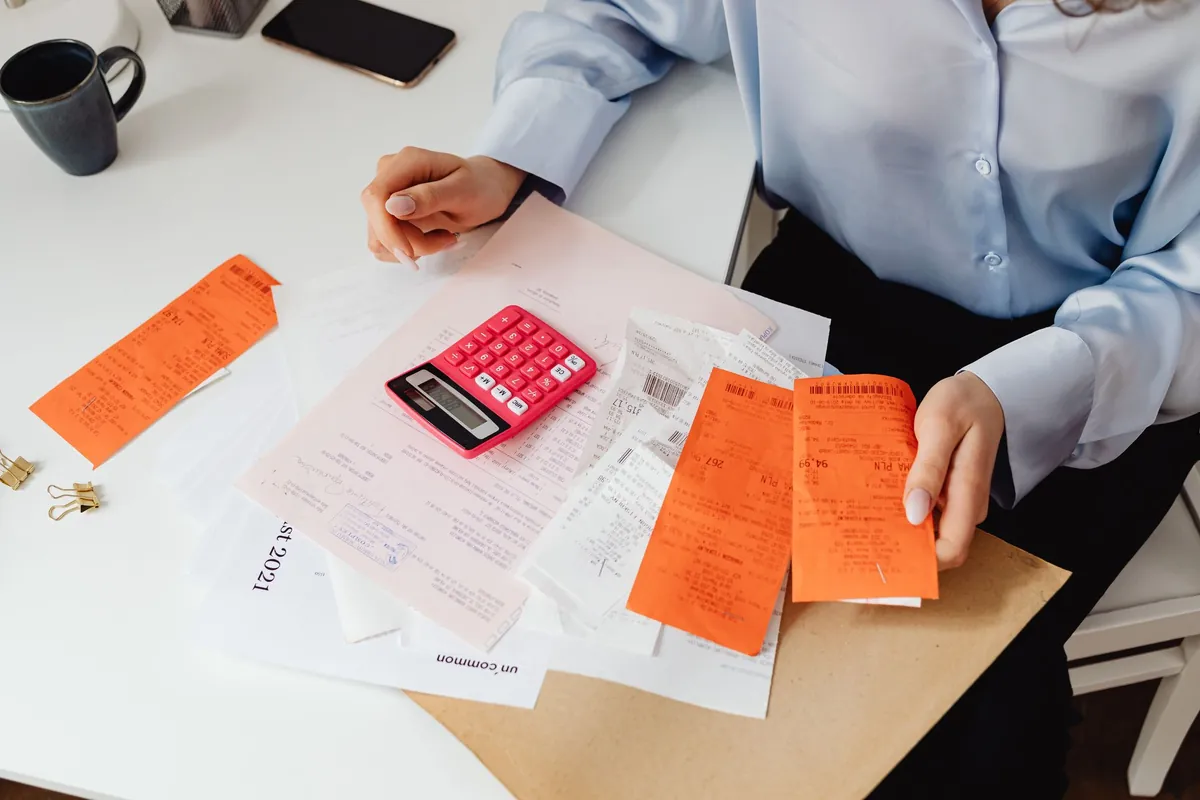
This is the part that calms most new sellers down. Say you sell RM40,000 of phone cases in a year. You don’t pay tax on RM40,000. You pay on what’s left after your business costs, and then only after personal reliefs.
LHDN’s test for an expense is that it’s “wholly and exclusively” spent to earn the business income. For a typical online shop, that covers:
- the cost of the stock you actually sold (not unsold stock still in your room)
- platform commission, transaction and payment fees (our Shopee, TikTok Shop and Lazada fee guides list them)
- packaging, postage and courier charges
- ads and boosts on the platforms or social media
LHDN says personal and capital expenses don’t qualify as ordinary expenses, so a phone you use for both family chats and the shop has to be split sensibly, and big one-off buys like a laptop or a label printer aren’t simply deducted like postage. This is the point where a tax agent earns their fee.
How much tax: the rates and some examples
Your business profit is added to any other income (a salary, for example), reliefs come off, and the rest is taxed on the resident individual scale. Here are the current rates, which LHDN lists for the 2023 to 2025 years of assessment and Budget 2027’s tax measures show as the current table, next to the Budget 2027 proposal.
| Chargeable income | Rate now | Proposed from YA 2027 |
|---|---|---|
| First RM5,000 | 0% | 0% |
| RM5,001 to RM20,000 | 1% | 1% |
| RM20,001 to RM35,000 | 3% | 3% |
| RM35,001 to RM50,000 | 6% | 6% |
| RM50,001 to RM70,000 | 11% | 11% |
| RM70,001 to RM100,000 | 19% | 18% |
| RM100,001 to RM150,000 | 25% | 24% |
| RM150,001 to RM400,000 | 25% | 25% |
| RM400,001 to RM600,000 | 26% | 26% |
| RM600,001 to RM1 million | 28% | 28% |
| RM1,000,001 to RM2 million | 28% | 30% |
| Above RM2 million | 30% | 30% |
Rates checked 25 November 2026 on LHDN's tax rate page and the Ministry of Finance's Budget 2027 tax measures (9 October 2026). The YA 2027 column is a proposal until it becomes law.
Two more numbers matter for small sellers. Every resident gets an individual relief of RM9,000 (Budget 2027 proposes RM12,000 from YA 2027). And if your chargeable income is RM35,000 or less, you get a RM400 rebate off the tax itself. Together, they mean a seller with a modest profit and no other income often owes nothing at all.
Most people claim more reliefs than this (EPF, insurance, lifestyle, children), so real bills are often lower. Here’s how the RM60,000 example adds up.
Example: tax on RM60,000 of business profit
Current resident rates from LHDN, checked 25 Nov 2026. No RM400 rebate, because chargeable income is above RM35,000.
Note
We’re not tax agents. This guide repeats what LHDN, the Ministry of Finance and Customs publish, with simple examples. For your own return, use LHDN’s MyTax portal, call LHDN on 03-8911 1000 or ask a licensed tax agent.

How to register and file Form B
The good news is that most Malaysians already have a tax number. LHDN says citizens and permanent residents aged 18 and above are given a Tax Identification Number (TIN) automatically from National Registration Department records.
- Find your tax number. Log in to MyTax (mytax.hasil.gov.my) and check your TIN. If you don't have one, apply online through e-Daftar on the same portal; LHDN moved TIN applications online from 1 January 2024.
- Keep the books from day one. A spreadsheet of sales, costs and platform payouts is enough to start. Match it to your bank statements each month.
- Work out the year's profit. Sales for January to December, minus the business costs above.
- File Form B on e-Filing. Form B is the return for resident individuals with business income. If you also have a salary, it goes on the same Form B, not on a separate Form BE.
- Pay any balance. Pay through LHDN's ByrHASiL by the deadline. Paying late adds a 10% penalty under section 103.
Once you have business income on file, LHDN may put you on the instalment scheme. Its CP500 notice arrives at the start of the year, and you pay every two months, up to six instalments, from March. Instalments paid more than 30 days late carry a 10% penalty. If the estimate looks too high, LHDN’s FAQ says you can appeal by 30 June using Form CP502.
A seller's tax calendar for 2026 income
- Your 2026 business year ends: count leftover stock and close the books
- First CP500 instalment, if LHDN has put you on the scheme
- Form BE deadline, only for people with no business income
- Form B deadline for business income
- Last day for Form B on e-Filing
These are LHDN’s standing deadlines. LHDN publishes each year’s return form programme early in the year, so check the 2027 one when it’s out.
The records LHDN expects you to keep
LHDN’s FAQ says to keep records and supporting documents for seven years for audit, counted from the year you submit the return. Not keeping proper records when ordered to is an offence under section 119A: a fine of RM300 to RM10,000, up to a year’s jail, or both.
Screenshot this: records to keep for 7 years
- Monthly payout or settlement statements from each platform
- Supplier invoices and receipts for every stock purchase
- Courier, postage and packaging receipts
- Invoices for ads and boosts
- Bank statements for the account your sales go into
- A stock count at the end of each year
- Your filed Form B and LHDN's acknowledgement
A separate bank account for the shop makes all of this easier. When sales and personal spending are mixed, sorting them at filing time is a headache.
Do small online sellers need e-invoices?
Most don’t. LHDN’s e-invoice rollout went in phases, by annual turnover: above RM100 million from 1 August 2024, down to the last group (up to RM5 million) from 1 January 2026. Then, on 30 August 2026, LHDN announced that the exemption threshold would rise from RM1 million to RM3 million from 1 September 2026. Businesses with annual turnover or revenue under RM3 million don’t have to implement e-invoicing, which LHDN says covers more than 1.1 million businesses.
You can still join voluntarily. Deputy Finance Minister Liew Chin Tong told Parliament on 7 October 2026 that businesses under the threshold that had already started “can choose to continue, or they can choose not to continue”. If your sales are growing towards RM3 million, plan ahead rather than waiting for the year you cross it.
Being exempt doesn’t make your sales invisible. The platforms themselves are far above the threshold and on e-invoicing. In March 2025, LHDN said it had used e-invoice data to identify 66,000 businesses on e-commerce platforms that hadn’t kept up with their tax instalments and had no record of filing returns. By October 2026, it had received more than 2.09 billion e-invoices and was running data analytics on them. It also runs an e-invoice special voluntary disclosure programme, with a full penalty waiver, until 31 December 2027.

What about SST?
For most resellers, sales tax isn’t your job. Customs’ MySST site says sales tax registration applies to manufacturers of taxable goods whose sales exceed RM500,000 in 12 months, and sales tax is also charged on imports. Some activities, like tailoring, don’t need to register at all. If you make your own products and your sales are heading towards RM500,000 a year, check with Customs (1-300-888-500). Service tax has its own thresholds, mostly RM500,000, for specific services.
Sole proprietor or Sdn Bhd: the tax difference
A sole proprietor’s profit is taxed as personal income on the scale above. A Sdn Bhd pays company tax, and small and medium companies (paid-up capital up to RM2.5 million and sales up to RM50 million) currently pay 15% on the first RM150,000 of chargeable income, 17% up to RM600,000 and 24% above that. Budget 2027 proposes 14% and 16% for the first two bands from YA 2027. Setting up a company has costs of its own (our SSM guide lists them), so for most side hustles a sole proprietorship is where people start.
What if you’ve never declared your shop income?
You’re not alone, and it’s easier to fix early. The penalties climb the longer it goes on: not filing a return can bring a fine of RM200 to RM20,000, up to six months’ jail, or both (section 112), and leaving income out of a return can mean a fine of RM1,000 to RM10,000 plus a penalty of twice the tax undercharged (section 113). Talk to LHDN or a tax agent about declaring the missed years. If you’re still working out whether selling online pays at all, start with our guide to what you keep from a RM100 sale.

Tax isn’t the fun part of running a shop, but a tidy spreadsheet and one evening in June is usually all it takes. Do it once properly and next year is copy and paste.
Frequently asked questions
Do I need to pay tax if I sell online part-time in Malaysia?
If you're buying or making things to sell at a profit, that's business income and it's taxable, even if you also have a salary. LHDN's FAQ says anyone who runs a business must register a tax file, even if the business makes a loss. Whether you actually pay anything depends on your total chargeable income after reliefs and rebates.
Which form do online sellers file, and when?
Form B, the return for resident individuals with business income. LHDN's deadline is 30 June, and e-Filing users get until 15 July. If you only have a salary and no business, it's Form BE, due 30 April (15 May on e-Filing).
Is selling my own preloved things taxable?
Clearing out your own used clothes or gadgets now and then isn't normally a business. Buying stock to resell, making products to sell, or selling regularly to earn a profit is. A licensed tax agent writing for RinggitPlus lists frequency, intention to profit, how long you hold items and how organised the selling is as the usual signs.
Do small online sellers need to issue e-invoices?
Not if your annual turnover or revenue is under RM3 million. LHDN raised the exemption threshold from RM1 million to RM3 million from 1 September 2026, and businesses under it can still join voluntarily. Businesses already on e-invoice below the threshold can choose to carry on or stop, the Deputy Finance Minister told Parliament on 7 October 2026.
How long do I have to keep my sales records?
Seven years. LHDN's FAQ says to keep records and supporting documents for seven years for audit purposes, and not keeping proper records when ordered to is an offence under section 119A with a fine of RM300 to RM10,000, up to a year's jail, or both.
What expenses can an online seller deduct?
LHDN's rule is that an expense must be wholly and exclusively incurred in producing the business income. For a typical online shop that covers the cost of the stock you sold, platform commission and payment fees, packaging, postage and ads. Personal spending and capital items don't count as ordinary expenses.
Will tax rates change for 2027?
Budget 2027 proposes changes from the 2027 year of assessment: the individual relief goes from RM9,000 to RM12,000, the 19% band drops to 18%, part of the 25% band drops to 24%, and the 30% top rate starts above RM1 million. These are proposals until passed, and they don't apply to the return you file in 2027 for 2026 income.
Sources
- LHDN: Return form deadlines for Form BE and Form B (checked 25 Nov 2026)
- LHDN: Tax rates for resident individuals, YA 2023 to 2025 (updated 26 Jun 2026)
- LHDN: Frequently asked questions for individuals, registration, records and forms (updated 19 Nov 2026)
- LHDN: Instalment payments for business income, CP500 (updated 23 Nov 2026)
- LHDN: Offences, fines and penalties under the Income Tax Act 1967 (updated 25 Jun 2026)
- LHDN: e-Invoice implementation timeline and RM3 million exemption (updated 30 Aug 2026)
- LHDN media statement: e-Invoice exemption threshold raised to RM3 million from 1 September 2026 (30 Aug 2026)
- Ministry of Finance: Budget 2027 tax measures, proposed rates and reliefs from YA 2027 (9 Oct 2026)
- Malay Mail: Tax-exempt taxpayers can opt to keep using e-invoices, says Liew (7 Oct 2026)
- The Star: 66,000 e-commerce businesses not complying with tax regulations, says LHDN (4 Mar 2025)
- NST: LHDN receives over 2.09 billion e-invoices, uses data analytics (21 Oct 2026)
- RinggitPlus: When does online selling become taxable? (23 Sep 2026) and Personal income tax guide YA 2025 (Mar 2026)
- Royal Malaysian Customs Department, MySST: Registering a business for sales and service tax (updated 19 Jul 2026)
About the editor
Zen has been buying and selling online in Malaysia since 2010, more than 16 years, and has sold on several of the country’s e-commerce platforms. Zen runs 11street.my. How we check
11street.my is an independent guide. We are not affiliated with Shopee, Lazada, TikTok Shop, Taobao, Pinduoduo or any other platform, nor with the former 11street Malaysia marketplace.